
You've done it a hundred times. You're scrolling through photos or scanning a crowded room, and suddenly one person's outfit just grabs you. You couldn't look away if you tried. That's not random. There's actual science behind why certain clothing designs hijack your attention — and designers know exactly how to use it. Here's what they know that you don't.
Some Outfits Just Stop You Mid-Scroll
You've felt it before. You're scrolling through photos, moving fast, and suddenly your thumb stops. Someone's outfit just grabbed you. Maybe it was at a wedding — one guest who somehow looked like they belonged on a magazine cover. Or a stranger on the sidewalk wearing something that made you physically turn your head. We all have these moments, and we rarely question them. We just assume some people "have it" and others don't.

But here's what's interesting — that magnetic pull isn't random. Certain clothing designs are literally engineered to hijack your attention, and the science behind it starts with something you use every single day: your eyes.
Why Your Eyes Lock On Certain Colors
You already know bright colors grab attention — that's not news. But here's what's deeper: your eyes physically react to saturated, high-contrast colors before your brain even registers what it's seeing. It's a pre-conscious response. Your visual system prioritizes these signals automatically, like a reflex you never agreed to. Red is the fastest trigger — studies show it produces a quicker visual response than almost any other color, which is why fire trucks, stop signs, and that one stunning dress all share the same shade.

Think about your friend who always pops in group photos. They're probably wearing something your nervous system was literally built to notice. But color is only the beginning — because when you combine it with a specific pattern trick, the effect gets even more powerful.
The "Can't Look Away" Stripe Trick
You already know stripes are a classic. But here's the part most people miss — designers don't just slap stripes on fabric for style. They use directional lines to literally steer your eyes across someone's body like a road map. A diagonal stripe on a blazer pulls your gaze from shoulder to waist in one fluid sweep. Horizontal stripes widen your visual path. Vertical ones elongate it. Every direction is a deliberate choice.
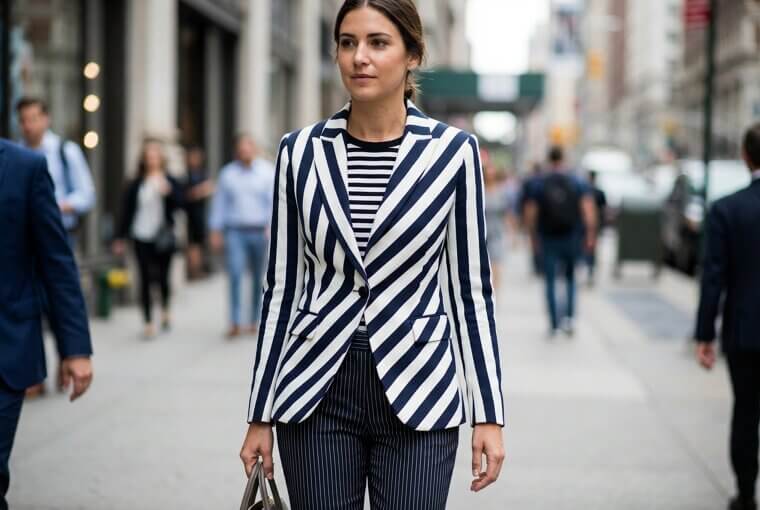
This is what professionals call "optical illusion dressing" — using pattern and placement to control what people see and how they see it. You'll encounter more advanced versions of this trick as we go. But first, there's something happening at every holiday party that exploits an even sneakier part of your vision.
Sequins Hijack Your Peripheral Vision
Here's something you probably never realized: sequins aren't just decorative — they're exploiting a survival mechanism hardwired into your brain. Your peripheral vision evolved to detect flickering light and sudden movement at the edges of your visual field. Thousands of years ago, that reflex kept you alive. Today, it's why a sequined dress across a crowded holiday party yanks your attention sideways before you even realize you're looking.
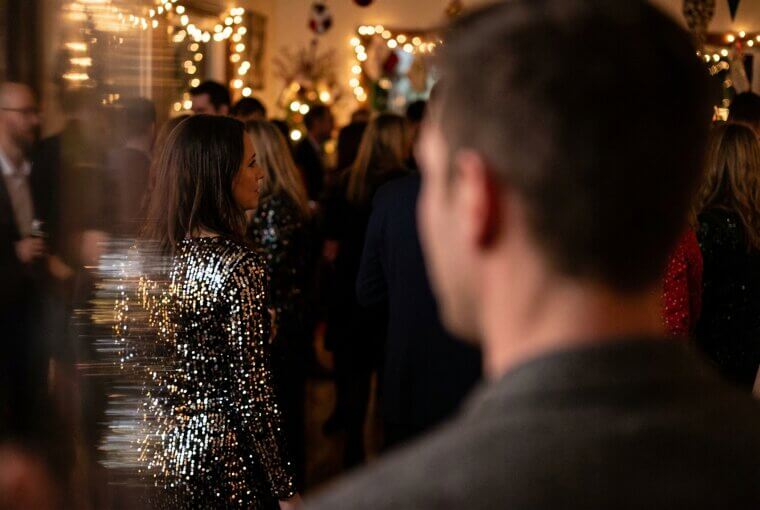
Every tiny disc catches light at a slightly different angle, creating a constant shimmer that your ancient threat-detection system reads as movement. You literally cannot help but stare. But what happens when a design doesn't just catch your eye — it actually traps it there?
Why Asymmetry Feels So Magnetic
Here's a belief worth questioning: symmetry equals beauty. It sounds right, but asymmetrical clothing designs — a one-shoulder dress, an uneven hemline, a jacket with mismatched lapels — actually hold your gaze significantly longer. Why? Your brain treats visual imbalance like an unsolved puzzle. It keeps scanning, trying to "fix" what it's seeing, which means your eyes stay locked on the design instead of moving on.
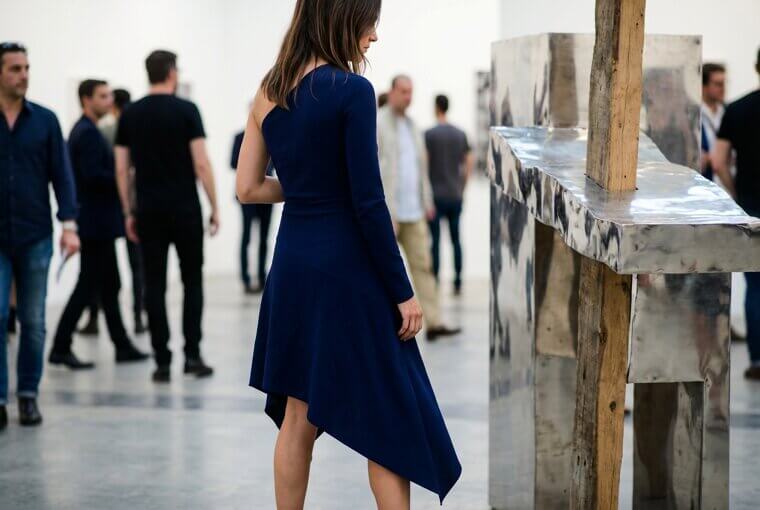
Remember how stripes guide your eye across the body? Asymmetry does something sneakier — it traps your eye in a loop. Designers exploit this neurological quirk deliberately. Next time you see a red-carpet gown that feels impossibly magnetic, look for the imbalance. But some designers take this manipulation even further with a technique most of them won't openly discuss.
This Simple Trick Designers Won't Admit
Here's what stylists know that they rarely say out loud: most show-stopping outfits aren't designed to be universally bold. They're built around one calculated detail called a "focal anchor." It might be an oversized button, an unexpected cutout, or a single splash of contrast color placed at exactly the right spot. Professional stylists position these anchors near the face or waist deliberately — because those are the zones where your eye naturally wants to settle.

That striking outfit you couldn't stop staring at? It wasn't an accident. One carefully chosen detail was doing all the heavy lifting while everything else stayed quiet. Think about that next time you admire someone's look — find the anchor. Now here's the exciting part: you can steal this exact technique without spending a dime on design school.
You Can Steal This Red Carpet Secret
Here's your assignment: pick one magnetic piece — a bold scarf, a vintage brooch, an eye-catching belt — and pair it with your simplest outfit. A plain white shirt. Dark jeans. Nothing competing for attention. That single detail becomes your focal anchor, and the quiet backdrop makes it impossible to miss. This is exactly how celebrity stylists work. They don't dress their clients in ten loud pieces. They build a calm canvas around one conversation starter.
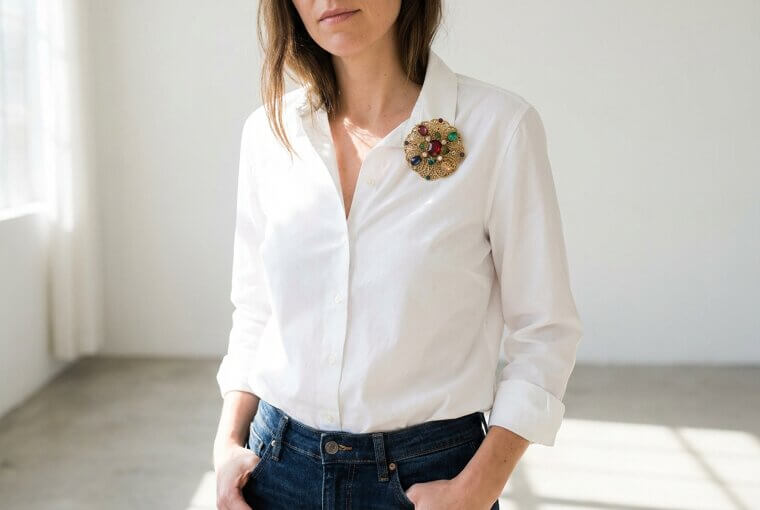
You don't need an expensive wardrobe to pull this off. You need one piece that makes someone's eye land and stay. Try it tomorrow morning — you might be surprised who stops you to ask about it. But what if the real secret isn't about accessories at all, but about colors most people would never dare combine?
The Color Combination Nobody Expects
Cobalt blue with burnt orange. Emerald green with hot pink. These combinations make people stop mid-sentence. Not because they're chaotic — because they're scientifically electric. Colors sitting directly opposite each other on the color wheel create maximum visual tension, and your eyes physically can't settle. They keep bouncing between the two hues, which means they keep returning to the person wearing them. Haute couture designers have quietly used this trick for decades. Valentino built entire collections around it. Yet somehow, this knowledge never makes it into everyday style conversations.
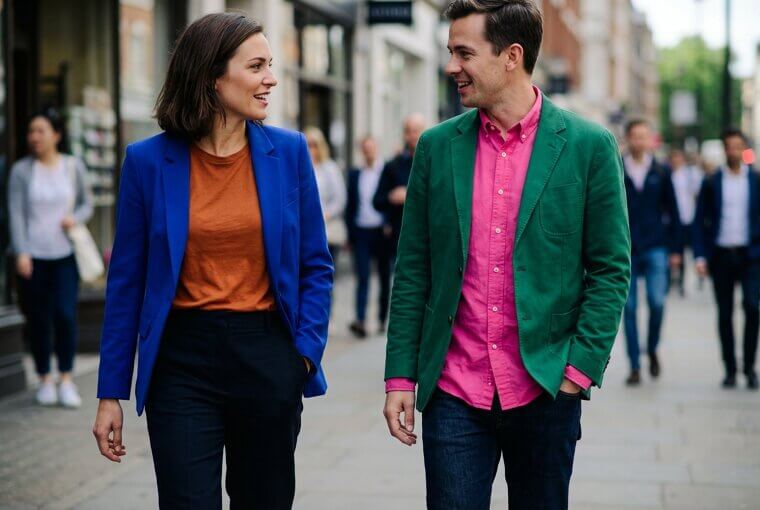
Most people retreat to safe neutrals their whole lives, never knowing they're leaving this tool on the table. You don't need a bold personality to wear bold color — just the knowledge that it works. Now imagine combining color with something your brain responds to even before it registers color at all.
Why You Remember That Wedding Guest
Close your eyes for a second. Think about the last wedding or reunion you attended. Chances are, one person's outfit just materialized in your mind — maybe before you even remembered their name. That's not a coincidence. That person probably wasn't wearing anything wildly expensive. But their outfit told a story your brain filed away permanently. The bold color against everyone else's safe navy. The single striking detail near their face. The unexpected silhouette that made them look like they belonged in a different, more interesting movie than everyone else.

They were using every principle you've been reading about — likely without even knowing it. They just seemed to glow. Here's the thing: that person could be you. And it starts with something most people completely overlook — texture.
Texture Does More Than You Think
Here's something your brain does that nobody talks about: when you see velvet, corduroy, or chunky knit fabric, the somatosensory cortex — the part of your brain responsible for processing touch — lights up. You haven't touched anything. You're just looking. But your brain is already simulating how that fabric would feel under your fingertips. This is why a velvet blazer in a room full of cotton button-downs feels almost impossible to ignore. It's not louder or bolder than anything else in the room.

It's quietly hijacking an entirely different sense. Rich texture turns clothing from something people see into something they almost physically feel. And that extra sensory layer makes the wearer magnetic in a way that color alone never could. Speaking of tricking the eye — one particular dress design exploited visual perception so powerfully, it literally broke the internet.
The Illusion Dress That Broke The Internet
You remember those strategically placed stripes from earlier? Designers like Hervé Léger took that concept nuclear. By placing contrasting color panels — dark on the sides, light down the center, or vice versa — they created dresses that literally reshape the human silhouette in the viewer's mind. Your brain sees the color boundaries and interprets them as body contours, even when the actual body underneath tells a completely different story. The effect is so powerful that onlookers physically cannot reconcile what they're seeing with what they expect to see.
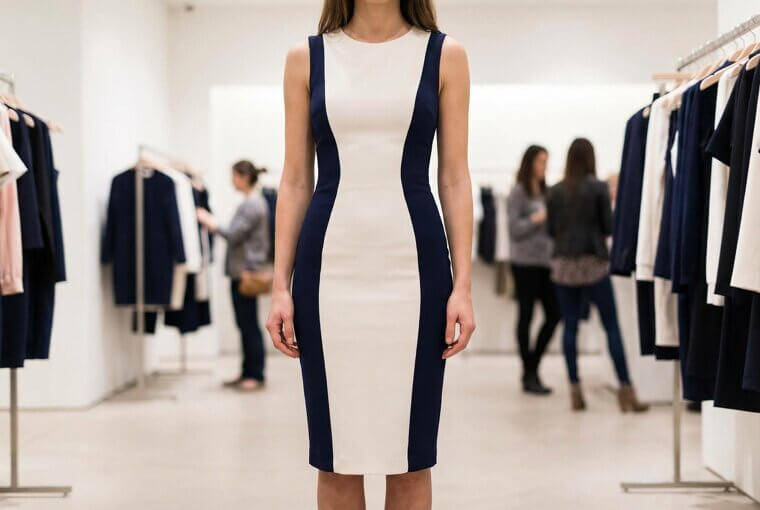
Their gaze gets trapped in a processing loop, recalculating the silhouette over and over. This isn't about changing bodies — it's about the staggering power of design to override perception itself in real time. Which raises a practical question: what's sitting in your own closet right now that's working against you?
What Your Closet Is Probably Missing
Here's a quick exercise. Open your closet and really look. How much of what's hanging there is essentially invisible — safe neutrals, predictable cuts, nothing that would make someone's eye stop? Most people discover that ninety percent of their wardrobe is designed to blend in. Now ask yourself one question: what's the gap? Is it a statement texture like velvet or brocade? A bold, unexpected color? An asymmetrical piece that plays with the eye? You're not looking to overhaul anything.

You're hunting for one single gap — the piece that, if added, would give you a genuine "can't look away" option the next time an invitation lands in your inbox. One piece. That's it. And here's something fascinating: the world of architecture might help you find it.
Architects Quietly Influence Fashion Designers
Here's what insiders know: many of fashion's most jaw-dropping designs weren't born in a design studio — they were borrowed from buildings. Iris van Herpen, widely considered fashion's most visionary engineer, studies the sweeping curves of architects like Zaha Hadid and translates structural principles directly into garments. Those cantilevered shoulders on a power blazer? That's load-bearing architecture. Geometric cutouts that make a dress look sculptural? Those follow the same tension principles holding up modern bridges.

Draped fabric that flows like a curved museum facade isn't accidental — it's calculated engineering scaled down to the human body. This is why some designs feel monumental while others just feel like clothes. The difference is literally structural integrity. And that same structural thinking explains something unexpected: why wearing a single color head-to-toe can be more striking than any pattern.
Why Monochrome Outfits Turn Heads
After all that talk about bold color combos and complex patterns, here's something that seems backward: wearing a single color from head to toe can be even more arresting. When you step out in all-lavender or all-rust, you eliminate every visual boundary between garments. Your brain can't segment the outfit into separate pieces — shirt, pants, shoes — so it processes the entire person as one bold, unbroken shape.
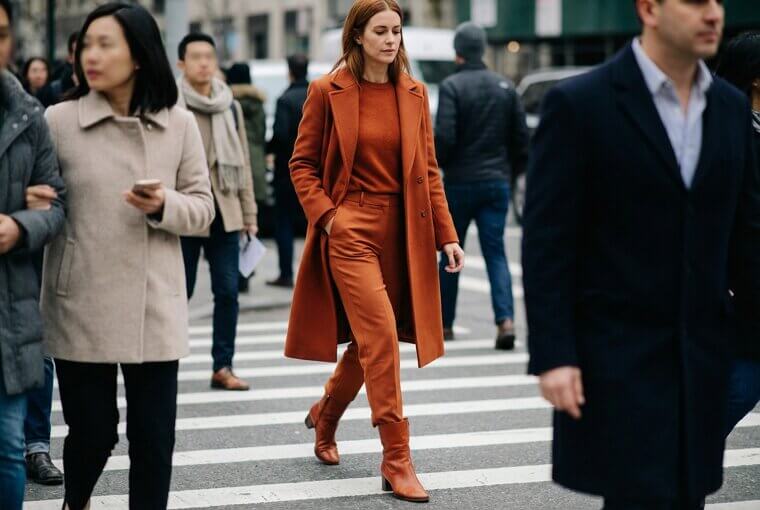
Stylists call this technique "color drenching," and it's quietly one of fashion's most powerful moves. No pattern, no embellishment, no contrast needed. Just one continuous wave of color that the eye has no choice but to absorb whole. Want to try it yourself? It's easier than you think.
Try "Color Drenching" This Weekend
Here's your weekend experiment. Pick one color you genuinely love — not safe black or gray, something with personality. Now build an outfit using different shades within that family. Forest green with sage and olive. Cobalt with powder blue and navy. Nothing needs to match perfectly. The magic trick? Mix textures within your chosen color. A chunky knit sweater with silk pants, both in burgundy, creates richness and depth that a single fabric never could.
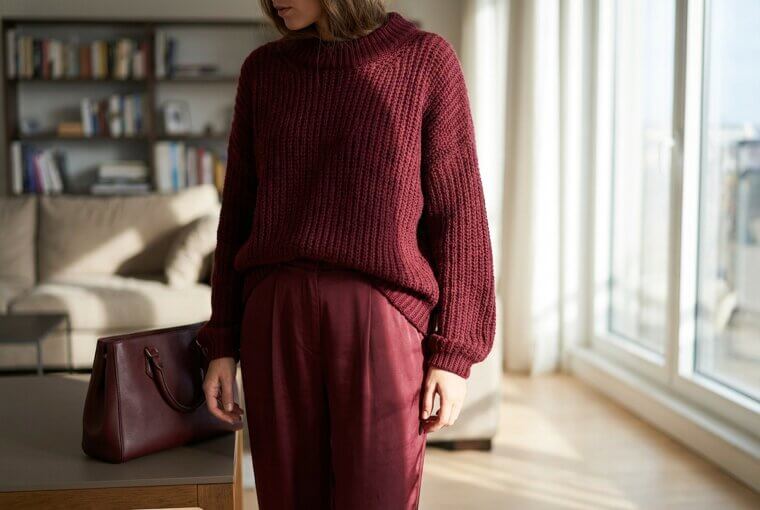
The worst thing that happens is you look polished and intentional. The best? Someone stops you mid-conversation to say you look incredible. Either way, you win. But what if your outfit could literally change color while you're wearing it?
The Fabric That Changes In Light
Imagine wearing a fabric that shifts from deep purple to emerald green as you walk across a room. That's exactly what iridescent materials do. Shot silk, holographic textiles, and oil-slick finishes literally change color depending on the angle and lighting — and your brain cannot stop watching. Here's why: every time the hue shifts, your visual system recalculates what color it's actually seeing. That recalculation creates a continuous attention loop. You physically can't dismiss it because the information keeps updating.
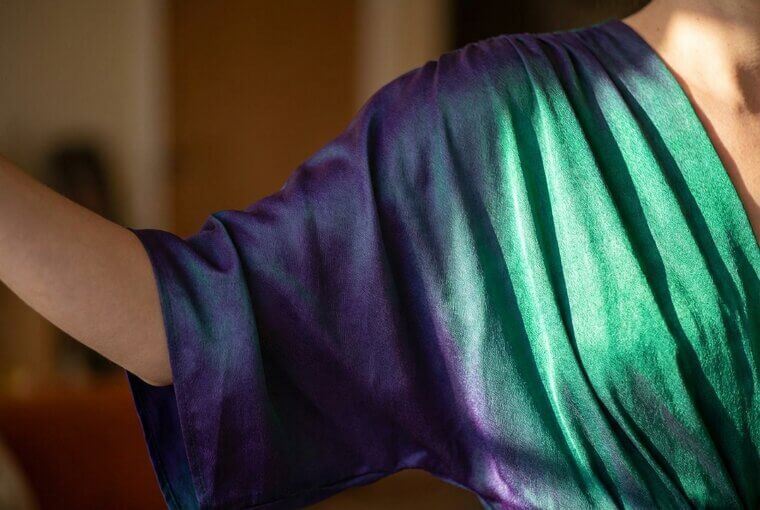
Remember how sequins hijack your peripheral vision with flickering light? Iridescent fabrics exploit the same principle but with something far more sophisticated — color itself becomes unstable. And the best part? These fabrics have moved well beyond couture runways. You'll find color-shifting jackets, skirts, and accessories at mainstream retailers right now. But size might be an even more powerful visual weapon than light.
Why Oversized Silhouettes Command Attention
That oversized coat billowing behind someone on the street isn't just fabric — it's territory. Dramatically voluminous clothing physically occupies more visual space, and your brain reads that space as authority. Here's where it stops being about style and starts being about stakes: research on "enclothed cognition" shows that what you wear measurably changes how people treat you. In job interviews, candidates in structured, space-commanding clothing receive higher competence ratings. In negotiations, the person whose silhouette dominates the room secures better outcomes.
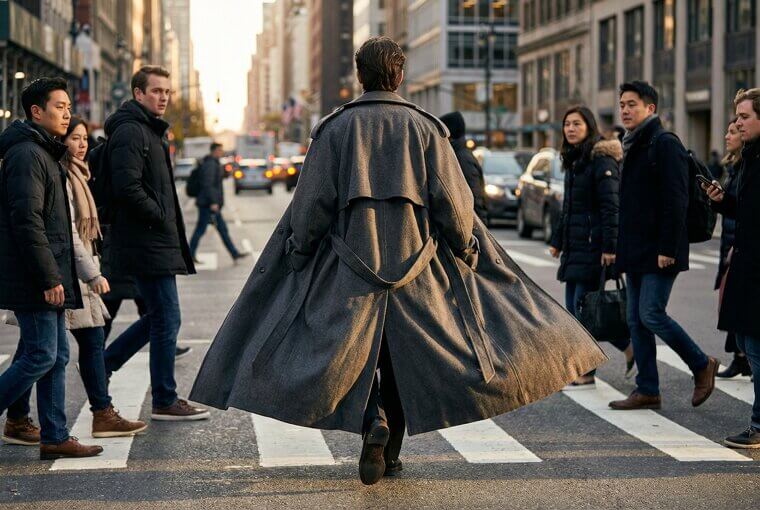
Think about that for a moment. Your wide-leg trousers and billowing sleeves aren't just eye-catching — they're quietly reshaping how colleagues, strangers, and hiring managers perceive your competence before you even speak. This isn't vanity. It's a tangible, documented advantage. And the psychology goes even deeper than silhouette.
The Psychology Behind "Power Dressing"
Here's what the research actually says: people form judgments about your competence, trustworthiness, and social status within 100 milliseconds of seeing you. That's faster than a blink. And clothing is the single biggest visual cue driving those snap decisions. This isn't abstract theory — it plays out in measurable ways. Studies show well-dressed patients receive longer medical consultations. Job candidates in eye-catching, polished outfits get callbacks at significantly higher rates. Even store employees respond faster and more attentively to customers whose clothing signals intentionality.

Every interaction you have — buying groceries, meeting a new doctor, walking into a bank — is quietly shaped by what you're wearing. Fashion isn't frivolous. It's the first conversation you have without opening your mouth. So what's the one detail that professionals use to make sure they're always remembered?
One Detail Doctors And Lawyers Use
Image consultants who work with high-profile doctors, lawyers, and executives all recommend the same tactic: choose one signature detail and wear it every single time. A distinctive watch. A particular collar style. A pocket square that's always there. It doesn't need to be expensive — it needs to be consistent. Over time, that single detail becomes your visual brand. People start associating it with you before they even remember your name.
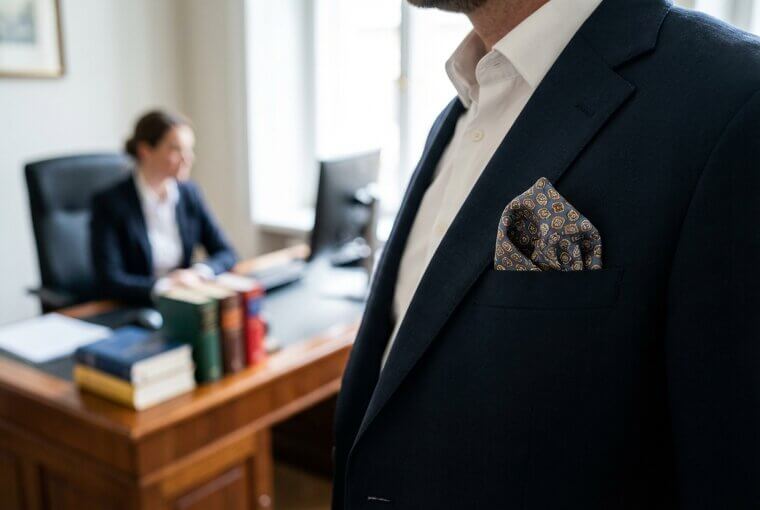
Remember that unforgettable wedding guest from earlier? Chances are, they had exactly this kind of signature element. This is how ordinary people become instantly recognizable. And choosing yours is simpler than you might think.
Pick Your Signature Detail Today
Here's your homework — and it takes five minutes. Think about what you already reach for instinctively. Maybe you own seven scarves and keep buying more. Maybe you always notice interesting rings. Maybe people already comment on your hats. That gravitational pull? That's your signature detail trying to announce itself. We all know someone like this. The neighbor who's always in red lipstick. The uncle whose bow ties spark every conversation. The colleague whose colorful glasses became so iconic that people recognize her from across a parking lot.
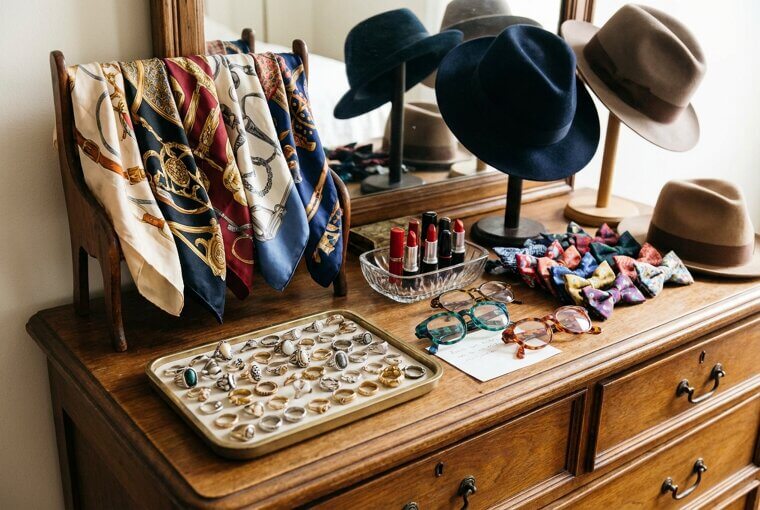
Your turn. Pick the one thing that already feels like you, and commit to it. Wear it Monday. Wear it next Friday. Watch what happens when people start saying, "That's so you." But what about the clothing itself — the designs that seem almost alive?
Designs That Move With The Body
Here's something most people never consider: some of the most mesmerizing garments in history were engineered not for how they look standing still, but for how they behave in motion. Flowing trains, swaying fringe, knife-pleated fabrics that ripple with every step, capes that billow behind like a personal weather system. These designs exploit the same primal instinct we discussed with sequins — your eyes are hardwired to track movement. But while sequins flicker, movement tells a story.
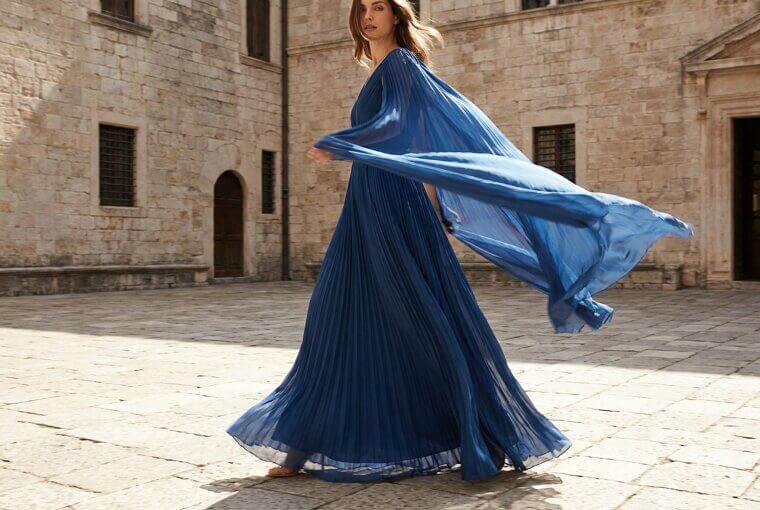
It transforms a person walking into a room into a cinematic moment. This is exactly why runway shows and red carpets favor fabrics that float and sway — they're impossible to ignore. But if movement captivates the eye, wait until you see what hidden mathematics does to a pattern.
The Hidden Math Inside Stunning Patterns
Here's something that might change how you see every patterned fabric forever: many of the world's most captivating textile designs are built on hidden mathematics. Paisley curves follow the golden ratio. Celtic knots repeat in fractal geometry. The intricate florals woven into Persian textiles use proportional relationships that mirror patterns found in seashells, galaxies, and sunflower heads. Your brain recognizes this mathematical harmony instantly — it just can't tell you why. That's the reason a handcrafted Persian-inspired print feels almost hypnotic while a random polka dot barely registers.
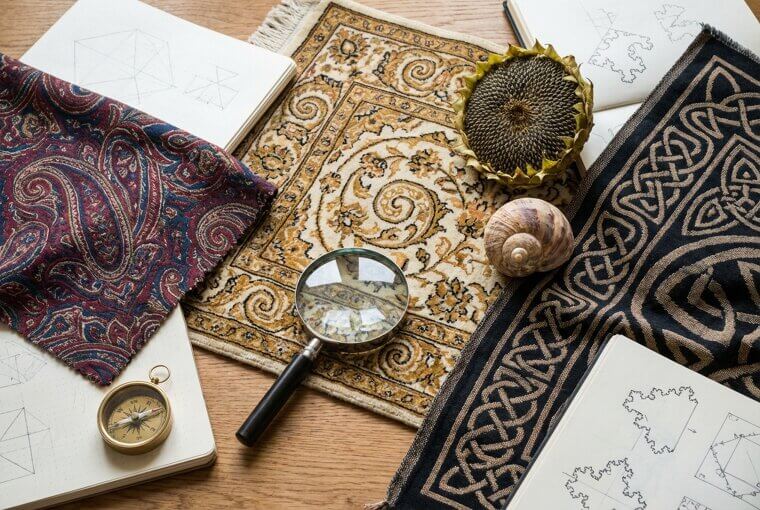
There's invisible architecture inside that beautiful scarf you love, guiding your eye along paths that feel effortless but are mathematically precise. Next time you're drawn to a pattern, you're really admiring an equation. And speaking of designs with deep roots — some of the most eye-catching clothing wisdom was never found in any textbook.
Why Grandma's Brooch Was Genius
Think about her for a moment — your grandmother, your mother, your aunt. That woman who pinned the same cameo brooch to every blouse she owned. Who clasped that one gold circle pin at her collar before leaving the house, every single day, like a ritual. You might have thought it was just habit. It wasn't. She was practicing focal anchoring decades before any stylist gave it a name. Without reading a single fashion article, she understood something profound: one magnetic detail, placed near her face, made everything else work.

Those women were instinctive geniuses. So if there's a jewelry box tucked in a drawer somewhere with her pieces inside — open it. That brooch isn't vintage clutter. It's inherited brilliance, waiting to be worn again. And that wisdom? It wasn't just passed down in families — it traveled across entire civilizations.
Cultural Designs The World Can't Ignore
Long before Paris runways existed, cultures worldwide had already cracked the code. Japanese kimono layering creates dramatic silhouette and reveals calculated slices of contrasting color at the collar and sleeve. West African Ankara prints use bold, mathematically repeating geometry that your brain finds irresistible. Indian sari draping produces six yards of continuous movement and texture. Mexican Tenango embroidery explodes with saturated complementary colors that would make any color theorist proud.
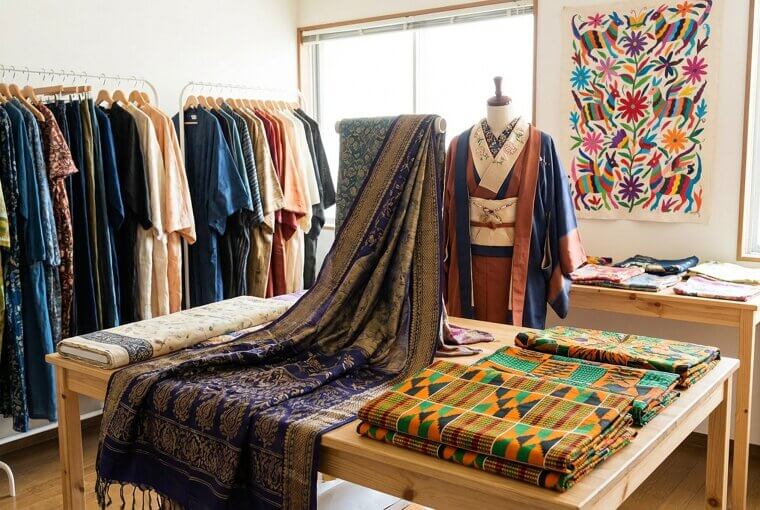
Every principle we've explored — focal anchoring, color tension, fractal pattern, flowing motion — was independently mastered by cultures spanning centuries and continents. These traditions didn't follow fashion theory. They invented it. And the beautiful thing is, the most powerful version of all these ideas might cost you less than lunch.
The $12 Accessory That Changes Everything
Here's your homework: find a bold, textured scarf or wrap for around twelve dollars. Look for one with rich color — deep saffron, cobalt, emerald — and visible texture like a chunky weave or embroidered detail. Now drape it over a plain white shirt or simple black dress. That's it. You've just added a focal anchor near your face, introduced color contrast, created movement every time you walk, and started building a signature detail. One purchase, four principles from this entire article working simultaneously.

You don't need a stylist or a runway budget. You need twelve dollars and five minutes at any store this week. That scarf transforms a forgettable outfit into one people actually see. But here's the deeper question — what happens inside *you* when you know you look magnetic?
Why Confident People Dress Differently
Here's what most people get backwards: they think confident people choose bold clothing. The research on enclothed cognition tells a different story. The clothing comes first. The confidence follows. When you put on something you know is visually magnetic — that scarf, that signature brooch, that unexpected color — your shoulders shift back. You make more eye contact. You walk into rooms instead of slipping through them. Your voice carries differently.

If you've been hiding in beige and black for years, hear this: dressing boldly isn't vanity. It's an act of self-respect. You're telling the world you're worth noticing. But how do professionals make sure the whole outfit actually works together? They use a brutal ten-second test.
What Stylists Notice That You Don't
Professional stylists use something called the "ten-second story." They glance at a client's outfit and ask one question: what does this communicate instantly? Energy? Elegance? Authority? Warmth? Most people's outfits tell no story at all — a busy pattern fights a competing color, a strong texture gets buried under a distracting silhouette, and everything cancels out into visual static.

The fix is the checklist you've been building throughout this entire article. One clear focal point. Intentional color. A touch of texture or movement. That's what stylists evaluate before clients walk out the door — and now you know it too. Tomorrow morning, you can put that checklist to work in under ten seconds.
Your Mirror Check Should Take 10 Seconds
Tomorrow morning, try this before you grab your keys. Stand in front of your mirror and ask three questions. First: where does my eye land? If nowhere specific, you're missing a focal anchor. Second: does one element surprise me — an unexpected color, a rich texture, a playful asymmetry? If everything feels predictable, it looks predictable. Third: would I remember this outfit on a stranger? Be honest.
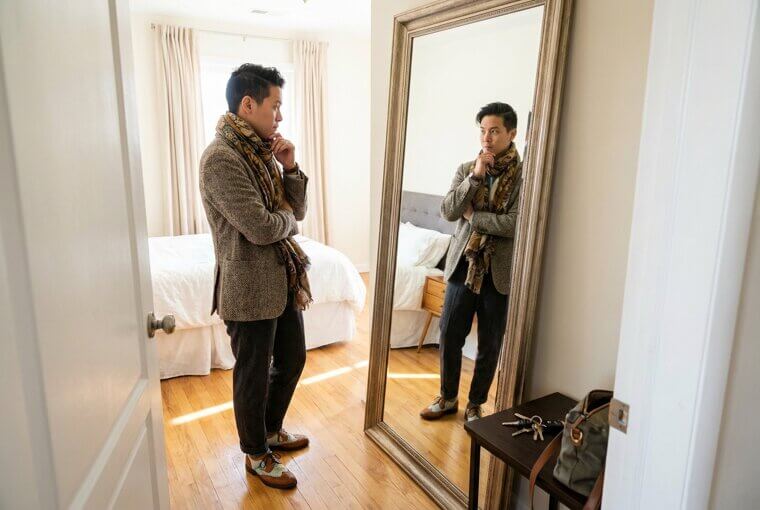
If any answer is "no," swap just one piece. One. That's all it takes. This ten-second habit turns everything you've learned into a daily practice — not something reserved for special occasions. But dressing memorably isn't really about you. It's about the people who'll remember you.
Dress For The Person Who Remembers You
Think about someone you love who's no longer here. You can still see them, can't you? Maybe it's your grandmother's turquoise ring catching kitchen light while she rolled dough. Your father's Sunday hat. Your best friend's red coat disappearing into a crowd. We don't just remember people in words. We remember them in color, in texture, in the way they filled a room visually. Every morning when you get dressed, you're choosing what your grandchildren will picture when they tell stories about you someday.

That's what this whole journey has really been about. Not vanity. Not trends. It's about being fully, beautifully present — giving the people who love you something vivid to hold onto long after you've left the room. You were never meant to be invisible.
You Were Born To Stand Out
You've learned why your eyes lock onto certain colors, how sequins hijack your peripheral vision, why asymmetry traps your gaze, and how a single brooch can anchor an entire outfit. You've discovered that architects shape fashion, that math hides inside beautiful patterns, and that cultures worldwide independently unlocked the same secrets of magnetic design. Most importantly, you've learned that none of this requires a big budget, a certain body type, or a particular age.

Playing it safe is just a habit — and habits change the moment you decide they will. One bold scarf. One unexpected color. One signature detail that's unmistakably yours. The next outfit you put on is your chance. Be the person in the room nobody can look away from. You were born for it.Disclaimer: This story is based on real events. However, some names, identifying details, timelines, and circumstances have been adjusted to protect the privacy of the individuals involved. The images in this article were created with AI and are illustrative only. They may include altered or fictionalized visual details for privacy and storytelling purposes